Ingredients
Equipment
Method
Step-by-Step Instructions
- Preheat your oven to 175°C (350°F) and grease a 9x13-inch cake pan with butter or non-stick spray.
- In a large mixing bowl, beat together 1 cup of unsalted butter and 1 cup of granulated sugar until fluffy and lightened in color, about 3-4 minutes. Add in 1/4 cup of oil, 4 eggs, 1 cup of Greek yogurt, and 2 teaspoons of vanilla extract, mixing until well combined and smooth.
- In a separate bowl, sift together 2 ½ cups of all-purpose flour, 1 teaspoon of salt, 2 teaspoons of baking powder, and 1 teaspoon of baking soda. Gently fold the dry ingredients into the wet mixture using a spatula until just combined.
- Pour the cake batter evenly into your prepared pan, smoothing the top with a spatula. Bake in the preheated oven for about 35 minutes, or until a toothpick inserted in the center comes out clean.
- While the cake bakes, prepare the pastry cream. In a medium bowl, whisk together 1/2 cup of granulated sugar and 4 egg yolks until combined. Heat 2 cups of whole milk in a saucepan until steaming but not boiling.
- Gradually temper the egg mixture, then cook over medium heat, stirring constantly until thickened, about 5-7 minutes.
- Once the cake is baked and slightly cooled, use the handle of a wooden spoon to poke holes all over the top of the cake. Pour half of the warm pastry cream into the holes.
- Let the cake cool completely in the pan on a wire rack.
- In a large bowl, whip 1 cup of heavy cream until it reaches soft peaks. Gently fold in the remaining pastry cream until fully combined.
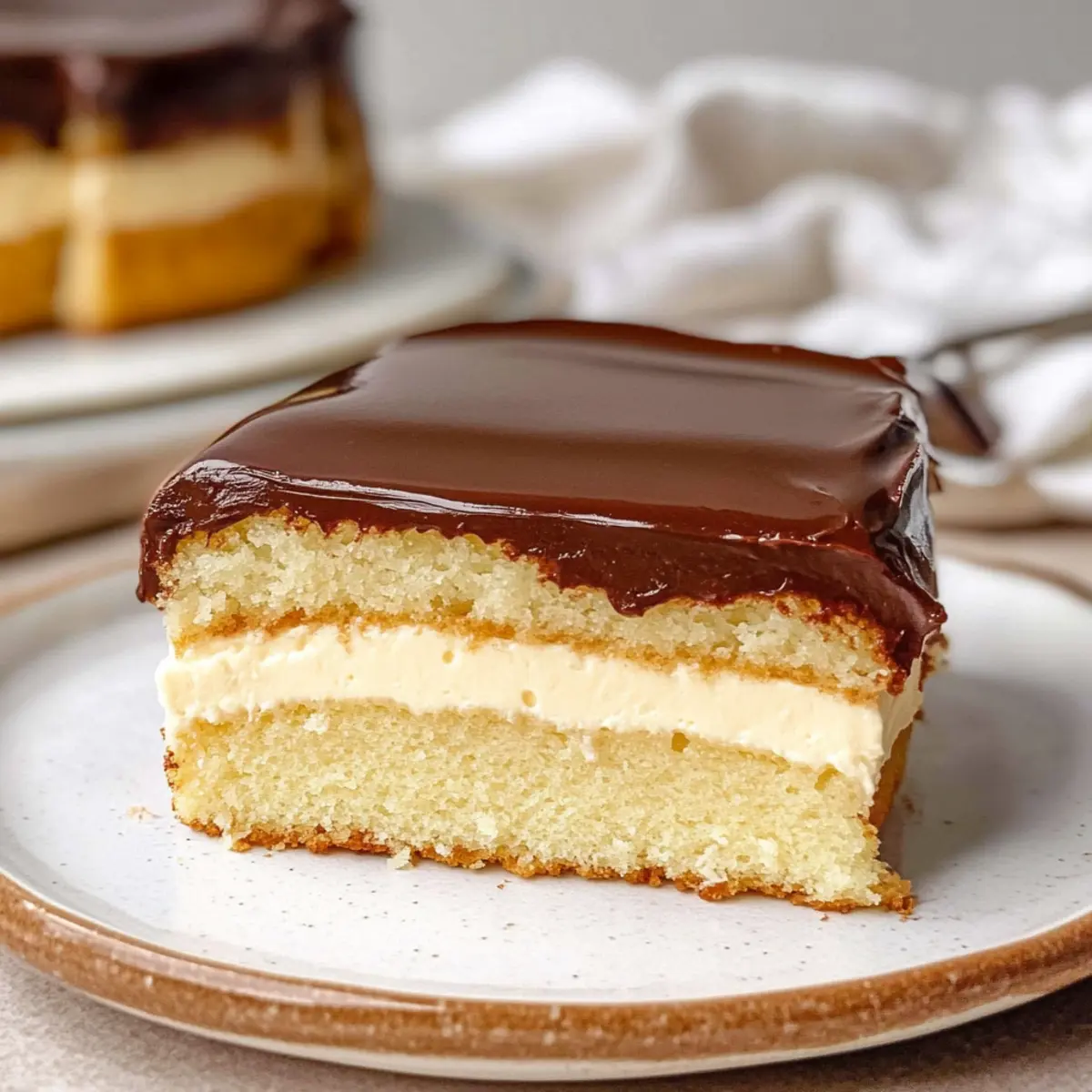
- Spread the diplomat cream evenly over the cooled cake, smoothing out the top and sides.
- In a heatproof bowl, melt 8 ounces of semi-sweet chocolate together with 1 cup of heated heavy cream until smooth and shiny.
- Once the ganache has cooled and thickened, pour it over the frosted cake, spreading it evenly.
- Chill the finished Boston Cream Poke Cake in the refrigerator for at least 4 hours, or overnight, to set the ganache.
Nutrition
Notes
Ensure butter and eggs are at room temperature for better emulsification.